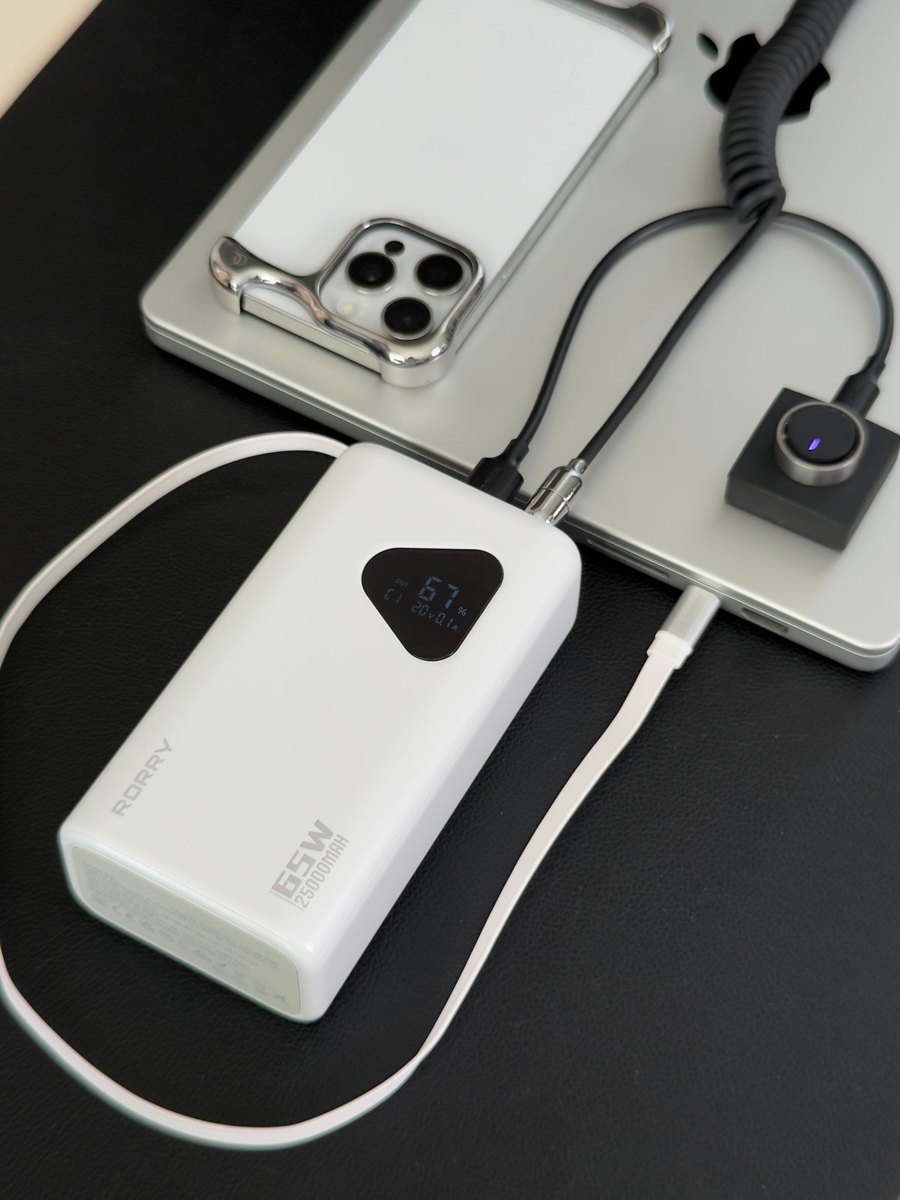
Pressing the button on a power bank tells you that its indicator works. It does not tell you how well it charges your phone or whether the cable in its pouch is sound. Before storing it, use the complete setup for an ordinary charging session while you are awake and nearby.
First inspect the pack. Look for a distorted case, separated seam, damaged port, or signs of leakage. Do not charge or test a swollen battery. Anker's safety instructions specifically rule out using a swollen or leaking pack; contact the manufacturer or an appropriate local battery-disposal service for the next step. Do not open the case to investigate.
Record a useful observation
Charge the bank using the equipment and method its manufacturer specifies. Then connect the phone with its intended cable and note the phone's starting charge. After a normal charging session, note the change and the power bank's remaining indication. You are checking whether the combination is useful, not conducting a laboratory capacity test.
Keep the conditions understandable. A phone streaming video during the session uses energy as it charges, so the percentage gain will not describe the bank's output alone. A battery near full may also charge more slowly. Record what the phone was doing rather than treating every difference as a fault.
Try every output you plan to use. If the bank has a button that enables a port or a special mode for small devices, confirm that behavior from the instructions. Do not assume a socket works in both directions because the plug fits.
Put it away with a return date
Store the bank within its specified temperature and charge recommendations, together with the working cable. Add a reminder based on the manufacturer's storage guidance and your actual use. A pack borrowed for travel should come back through the charging and inspection routine before returning to the reserve.
Keep the model number available so you can check safety notices. A bank that performs normally can still be included in a recall; successful charging does not override a manufacturer's stop-use instruction.
Avoid running the battery to empty merely to prove it can. The useful result is knowing how to connect it, that it supplies a meaningful charge, and when it was last checked. If that result deteriorates sharply, investigate before relying on it for a long interruption.