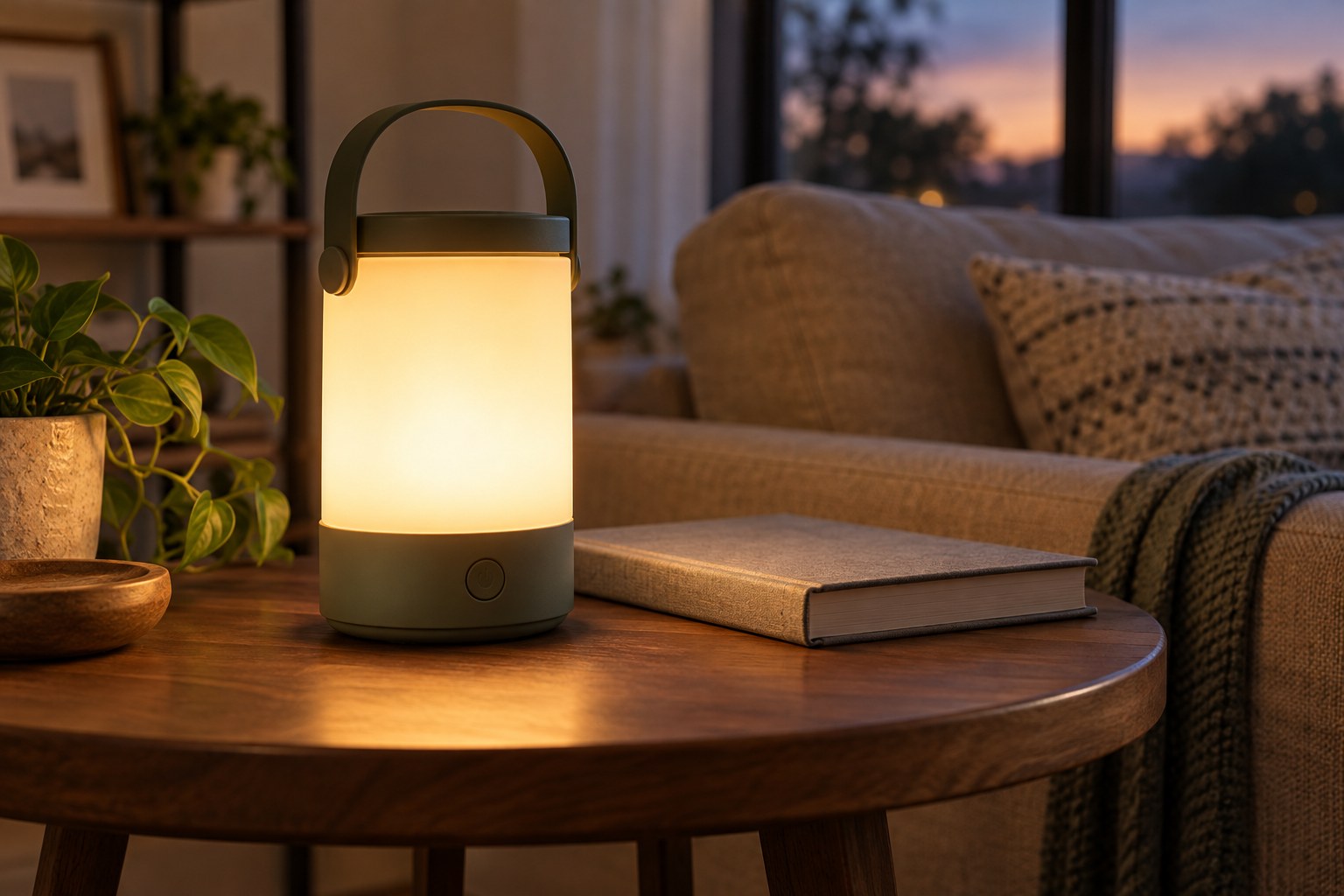
A camping lantern can light up a picnic table beautifully and still be unpleasant in a small living room. With the light close to eye level, a bare bright emitter may make it harder to see faces or read a page. Before comparing output figures, decide where the lantern will stand and what you want people to do around it.
For an outage, that might be eating a cold meal, finding a medication label, or helping a child settle down. These are different jobs from lighting a campsite. A low, usable setting and a stable base deserve as much attention as maximum brightness.
Start with the room
Pick a shelf or table that will stay clear when everyone gathers. Measure the space, including headroom if the lantern has a handle. A light that only hangs from a hook may be awkward in a rental where no suitable hook exists. Do not improvise a hanging point over a bed or route a charging lead across a doorway.
Look for a diffuser that spreads the light. If you can try the lantern, sit at the height where you will actually use it. Check both a book held close and the edges of the room. A brighter central spot is not necessarily better overall illumination. Petzl's explanation of beam patterns makes the useful distinction between broad close-range light and concentrated distance light, even though its examples concern headlamps.
A dimmer with clear stops may be easier to use than a tiny touch control in darkness. Try returning to a low setting after switching the lantern off. Some products remember brightness; others restart at full power. Neither behavior is universally wrong, but the household should know what to expect.
Read runtime alongside brightness
The longest runtime on a package often belongs to its dimmest mode. Look for a separate figure for the setting you expect to use. If a manufacturer supplies a runtime graph, notice whether brightness falls gradually or remains fairly steady before dropping. A long time until the final glow is not the same as a long evening of comfortable reading.
Choose a battery arrangement that fits the rest of your household. Replaceable cells are convenient when you keep the correct spares; a rechargeable lantern works well when it is regularly topped up. A USB socket does not mean any cable and charger combination will work, so identify the required input before putting the lantern into storage.
Leave a walking light available
A lantern is usually best left in one place. Keep a smaller flashlight for a bathroom trip so the whole room does not go dark when one person leaves. EPA recommends battery lighting in preference to candles during an outage. You can meet that aim with modest, well-positioned lights rather than trying to reproduce normal ceiling lighting throughout the house.
After your first ordinary evening using the lantern, write down the setting that felt comfortable and the charge it used. That observation is more useful for your room than someone else's camping photograph.