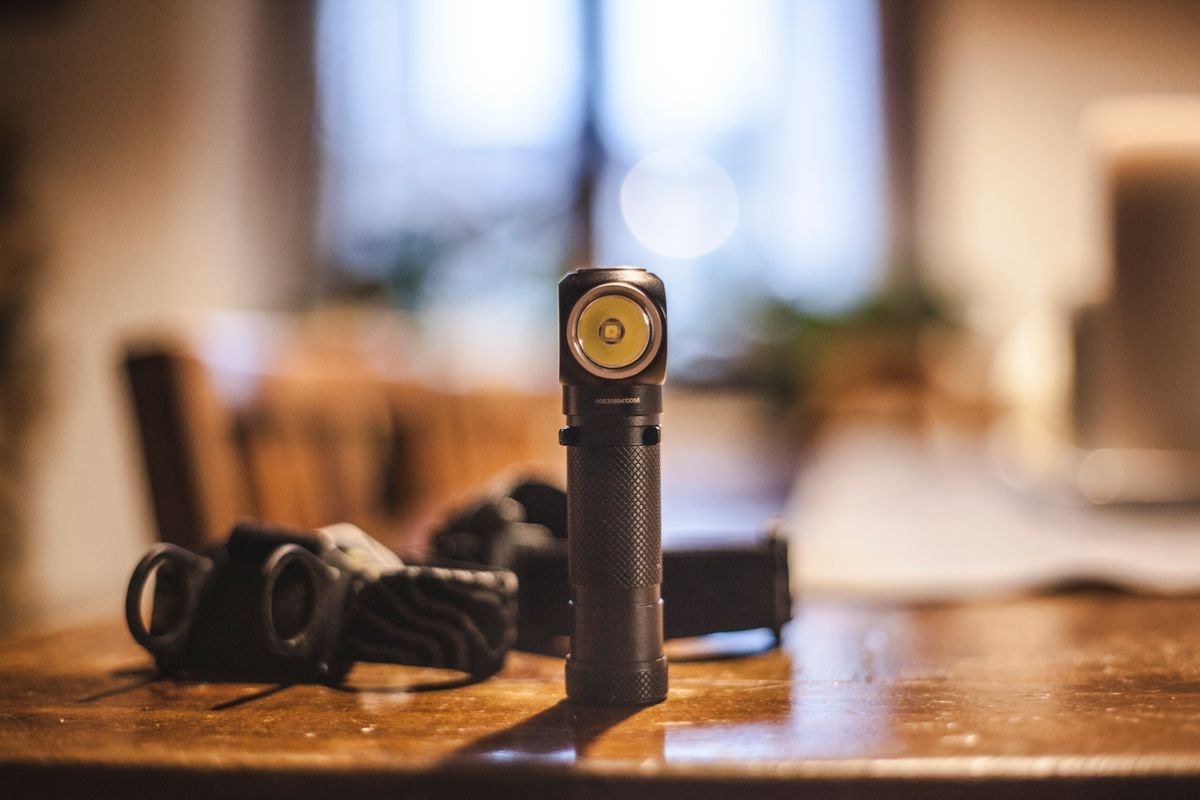
Waking in a dark unfamiliar room is disorienting even when nothing else is wrong. A bedside light gives someone time to look around before standing up. Its placement deserves a separate decision from the main emergency kit, especially in guest rooms, shared bedrooms, and homes where someone has limited mobility.
Sit or lie in the normal sleeping position and reach toward the proposed location. Can you find the light without leaning far over the bed, opening several drawers, or moving a glass of water? A dedicated spot on a stable table or inside a shallow drawer is often more dependable than a hook on the far side of the room.
Choose controls that do one useful thing first
An immediate steady beam is easier to use when half awake than a sequence of flashing modes. Try the switch by touch. If the light has a lock function, decide whether locking it in this location helps or merely delays access. A travel bag and a bedside drawer may call for different choices.
Use a low setting that lets you see the floor without dazzling a partner. Keep the beam away from faces. Do not soften a bright light by wrapping it in a shirt or pushing it under a pillow; use its intended settings or choose a different light. EPA favors battery-operated lighting over candles during power interruptions, so there is no need to put an open flame into this routine.
Include the things needed immediately after light
Glasses, a mobility aid, and suitable footwear may belong close by, arranged so they do not obstruct the floor. This is not a reason to crowd the bedside surface with an entire emergency kit. The aim is a clear first movement toward a safe route, not a storage display.
For a child, choose equipment appropriate to their age, with a secure battery compartment. Explain the plan in daylight: where the light stays, how to turn it on, and whom to call if the room goes dark. For a guest, point out the light when showing the room rather than assuming its purpose is obvious.
Recheck after ordinary changes
Changing bed sides, adding a charging stand, or moving a nightstand can make a once-easy reach awkward. When the room changes, repeat the reach check. Test the light and maintain its batteries according to its instructions.
If a household member takes the bedside flashlight for another task, return it before bedtime. A light that has a permanent location but is usually somewhere else does not solve the first few seconds of an outage. Make this one object easy to find without relying on a phone that may be charging across the room.