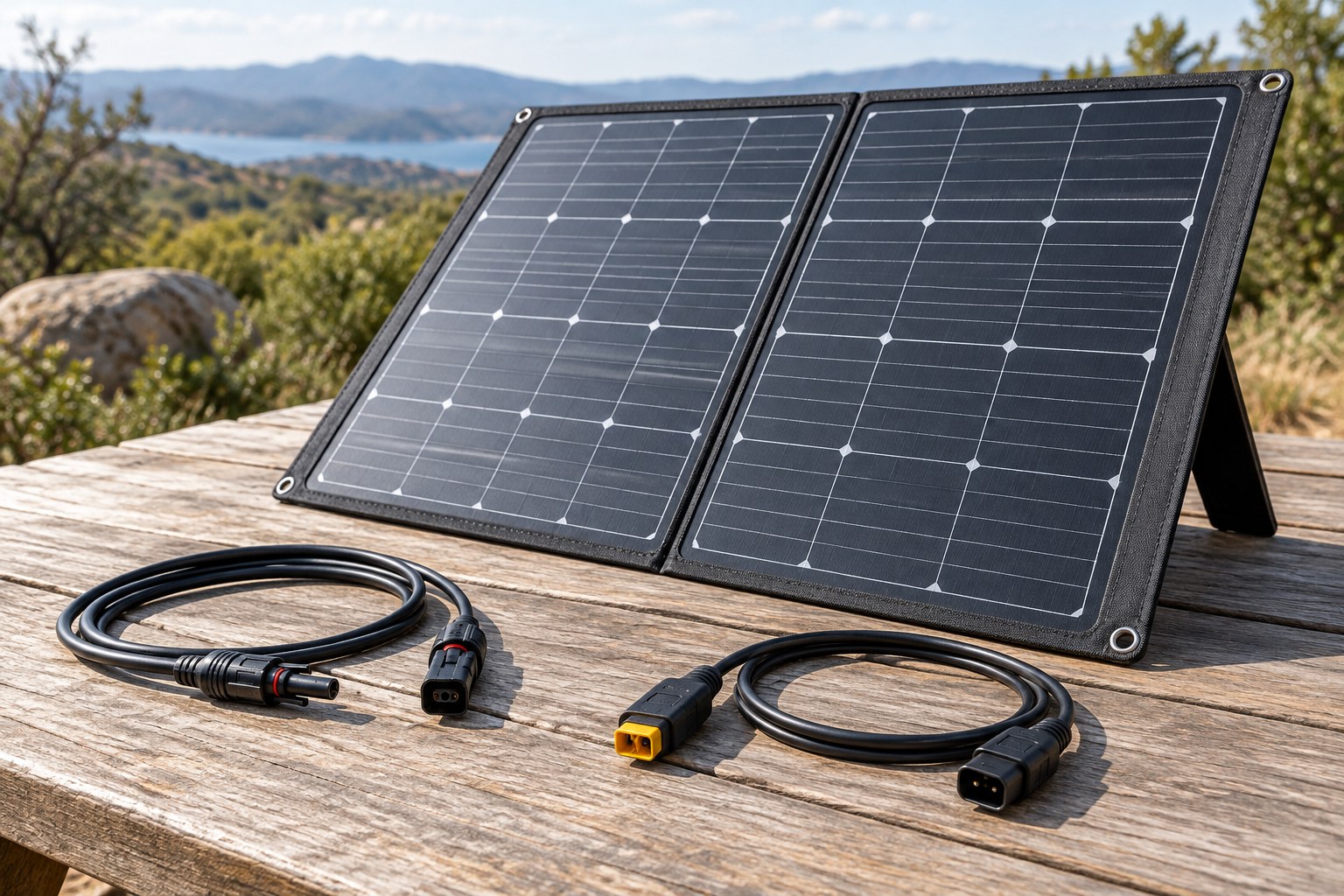
Portable solar equipment is often sold as if connecting any panel to any battery were straightforward. Matched kits can simplify the decision, but separately purchased parts need more care. A connector that fits does not prove the electrical specifications are compatible.
Start with the exact model numbers and current manuals for both products. Find the station's solar input limits and the panel's specification label. Do this before ordering an adapter. Photos in a marketplace listing are not a substitute for the manufacturer's documentation.
Keep different figures distinct
Panel specifications may include rated power, open-circuit voltage, operating voltage, and current. They do not describe the same thing. The EcoFlow panel manual, for example, lists open-circuit voltage separately from voltage at maximum power. When a station specifies a maximum input voltage, do not substitute whichever smaller figure appears nearby on the panel label.
Temperature and the way multiple panels are connected can affect the limits involved. If you are not sure how the specifications apply, ask the manufacturer to confirm the complete combination in writing. Give both model numbers and the intended cable. Do not experiment with series or parallel wiring based on a generic diagram from a different product.
Read any requirement for a charge controller, polarity, connector, or specific adapter. A physical adapter changes a connection; it does not necessarily regulate voltage or make an unsupported panel safe. Avoid modifying connectors or bypassing built-in protection.
Check the usable setup
Compatibility also includes the length and route of the supplied cable, the permitted weather exposure, and the charging temperature range. The panel may stay outside while the power station must remain protected. Confirm you can arrange that without pinching a lead through a closed door or creating a trip across the household's exit.
Store the documentation with a short note identifying the approved combination. This is particularly helpful if similar-looking cables belong to other equipment. A label reading “solar lead for this station” is clearer than a box of adapters whose history nobody remembers.
Change one component, review the combination
A replacement station may have a different input range even if the connector looks unchanged. The same is true when adding another panel. Review the complete setup rather than transferring assumptions from the old one.
After the manufacturer confirms compatibility, follow its connection and disconnection order and test in safe, ordinary conditions. If the station shows an input error, stop and consult the instructions. Do not repeatedly reconnect an uncertain arrangement in the hope that the next attempt will work.