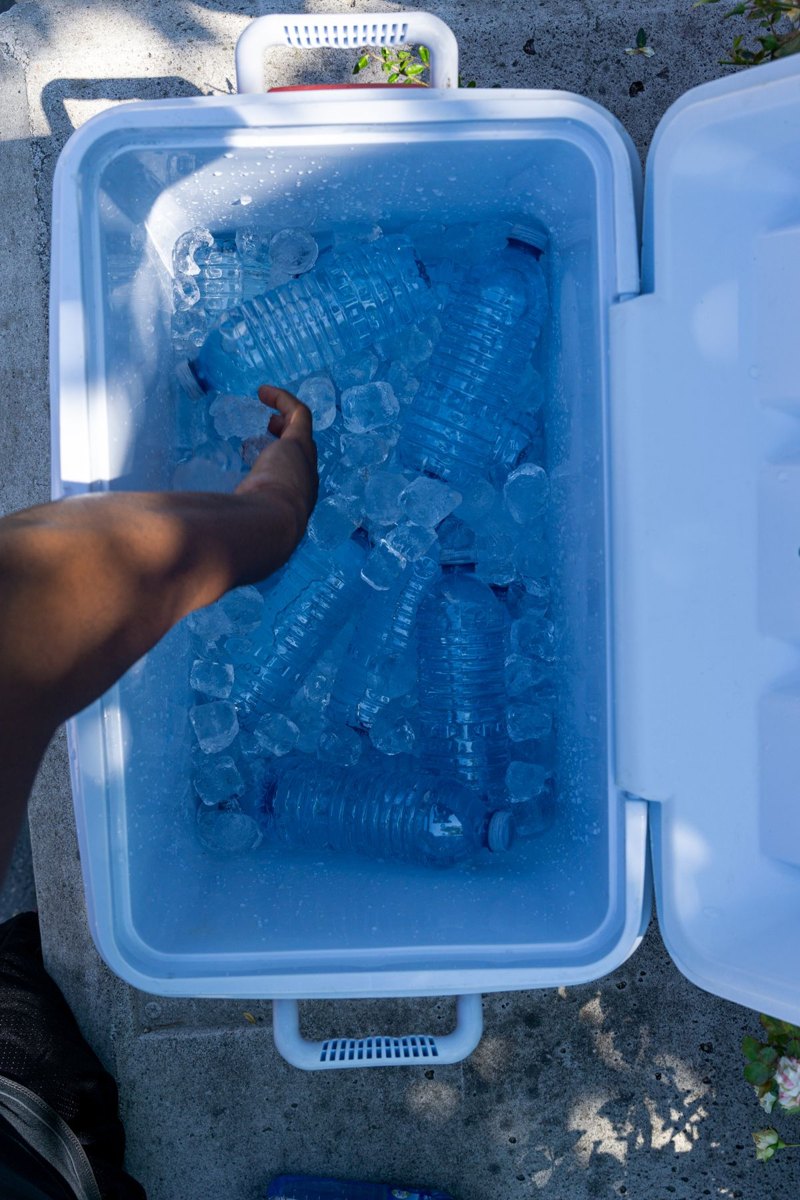
A cooler stored in the garage is a container, not yet a refrigeration plan. It needs an appropriate cold source, room for the food you intend to move, and a way to check temperature. Plan those pieces before an outage so you are not opening the refrigerator repeatedly while deciding what to do.
USDA says an unopened refrigerator generally keeps food cold for about four hours. That is a planning window, not a guarantee for every appliance and condition. Have a cooler and cold packs ready if a longer interruption is plausible, and use temperature information and official food-specific guidance to make decisions.
Decide what gets space
Do not assume every item in the refrigerator needs identical treatment. Identify the perishable foods you would prioritize, then check that the cooler can hold them with adequate cold packs or ice. The outside dimensions are not the usable food capacity once cooling material is added.
Keep raw meat and other foods that could leak contained and separated from ready-to-eat food. Use packaging that can withstand the planned arrangement, and protect food from meltwater as appropriate. A cooler should not become a bowl of mixed leaking packages.
If medicines need temperature control, follow the pharmacist and product instructions in a separate plan. Food-cooler advice does not establish a suitable medication storage temperature, and direct contact with ice can be a problem for some products.
Make the cold source realistic
Keep reusable packs frozen ahead of time if you have suitable space. Know where additional ice might be available, while recognizing that stores can run out or close. Do not base the plan on a guaranteed ice purchase after a widespread outage.
Dry ice has additional handling and ventilation hazards and should not be treated as an ordinary substitute for gel packs. If you plan to use it, obtain and follow specific supplier and public-health instructions in advance. A simple cooler plan need not include dry ice at all.
Place an appropriate thermometer where it can be read efficiently. Perishable food needs to remain at a safe cold temperature; feeling cool to the hand is not enough. Keep the cooler closed as much as possible and store it in a suitable cool location away from direct sun.
Write down the transfer
When moving food, record the time and any useful temperature reading. Moving warm food into a cooler does not erase time already spent too warm. If the history is uncertain, follow official disposal guidance instead of assuming the new container has made it safe.
Separate drinks people will reach for frequently if opening the food cooler would otherwise be constant. Put a note on the lid explaining what is inside and who is tracking it. That small step helps keep household members from treating emergency cold storage like a picnic cooler opened every few minutes.
After the outage, clean and dry the cooler, check its seal and drain, and return the cold packs to service. Review whether the capacity was enough for the foods you actually chose, rather than automatically buying a larger cooler to hold everything next time.