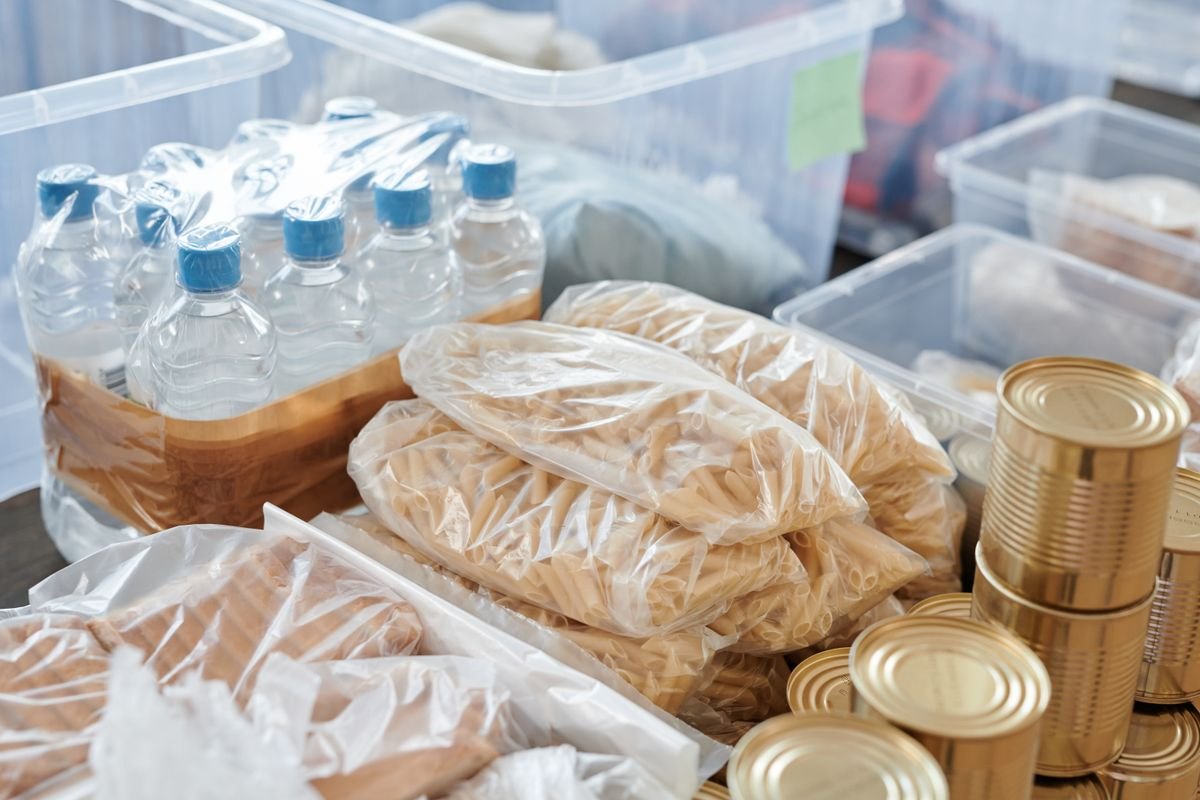
Apartment storage is usually a negotiation between everyday belongings and things kept for an unusual day. Water takes up real space and is heavy, so begin with an amount you can account for rather than buying the largest containers available.
CDC recommends at least one gallon per person per day for three days, with more if possible and additional needs considered. For two people, that starting amount is six gallons. Treat the calculation as a planning baseline, then consider pets, heat, health needs, and the water required by the food you have stored. Do not meet a storage target by deliberately drinking too little.
Measure the available spaces
Look for cool, dry indoor positions where containers will not be exposed to sunlight, household chemicals, or damage. Avoid the cupboard under a sink where cleaners and leaks may share the space. A low, suitable shelf or a protected floor-level location can be easier to manage than lifting heavy containers overhead.
Check the shelf's load rating and the stability of the furniture. Do not assume a decorative shelf can support a row of filled jugs. If there is doubt about a concentrated load or the suitability of a location, ask the building manager or an appropriate professional. Do not stack containers higher than their design allows.
Divide the reserve into locations if that makes access easier, but write down the total and where each part is kept. A bottle behind coats can disappear from memory even though it remains in the apartment. Keep enough immediately accessible that you do not need to unload a closet during the first hour of a disruption.
Choose packages around the way you will use them
Commercially bottled water is a straightforward option. Compare not just price per gallon but the weight you can carry, the ease of opening it, and how it will pour into a glass or kettle. Small bottles create more packaging but may suit someone who cannot lift a large jug. A mix of sizes can serve different tasks.
If using refillable containers, choose ones intended for drinking-water storage and follow the cleaning, sanitizing, filling, and replacement guidance from CDC and the container manufacturer. Do not repurpose a container that held chemicals. A food-looking bottle does not establish a safe history.
Keep labels visible. Mark self-filled water with its filling date and purpose, and follow the replacement schedule. For purchased water, retain the manufacturer's date and storage instructions. Use and replenish water through normal household activity so the reserve does not become a forgotten collection behind newer purchases.
Keep the apartment usable
Do not block a hallway, bedroom exit, access panel, or needed storage for a mobility aid. A reserve that makes the home harder to leave has created another problem. Avoid storing water where a leak would immediately reach electrical equipment or damage something difficult to replace.
Think about how you would carry a portion if asked to leave. The whole reserve need not travel, but a few accessible bottles can be easier than trying to decant a large container in a hurry. Keep transport needs separate from the amount intended for staying at home.
Once the locations are chosen, take a simple count and put a reminder where you make grocery lists. Add water gradually if the full amount strains your budget or space. A known, maintained supply is more useful than a larger purchase that blocks the door and cannot be moved by the person who needs it.