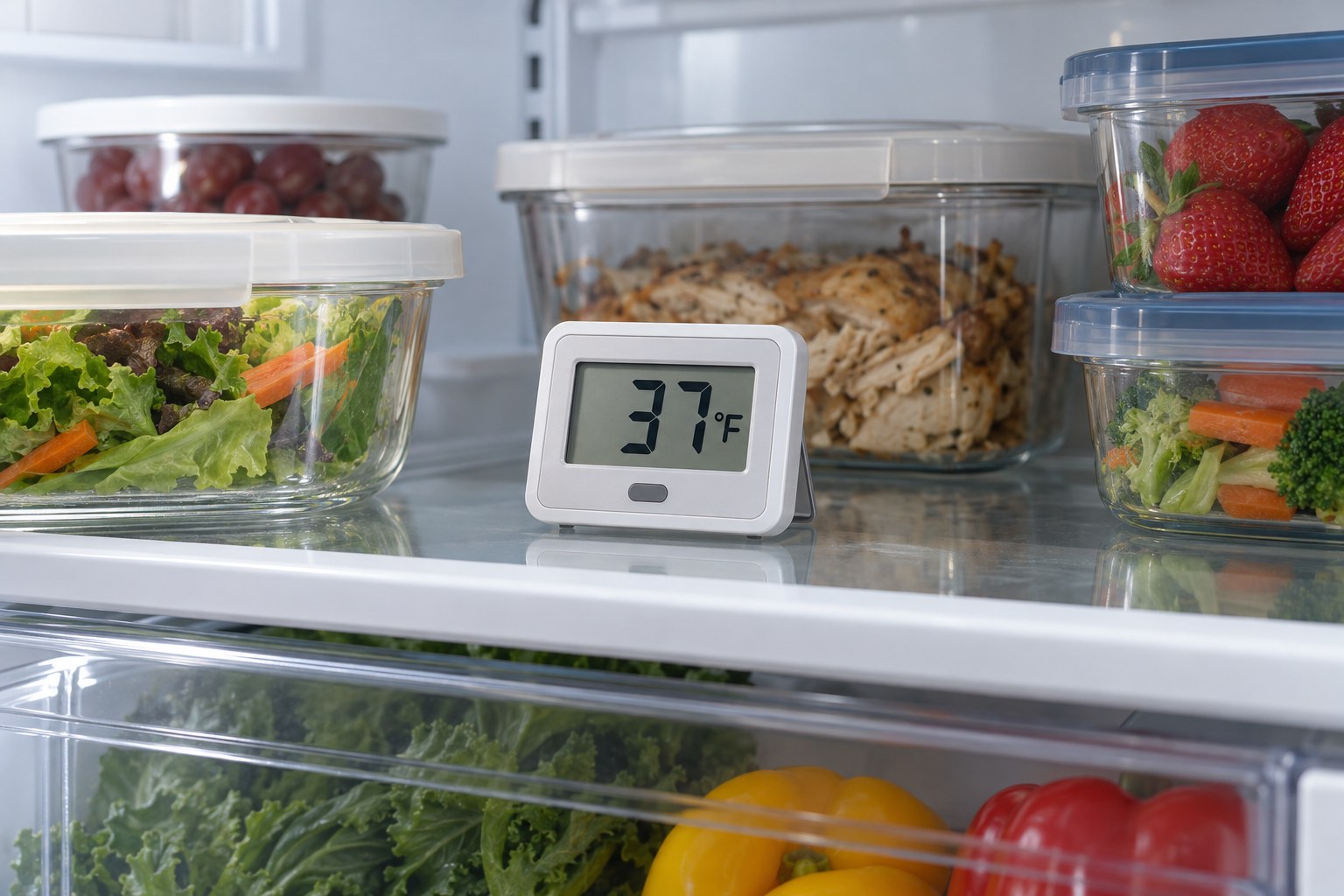
When an outage ends, a refrigerator may be running again without telling you how warm its food became. An appliance thermometer gives you a way to check conditions instead of relying on how the door or a bottle feels. Put one in the refrigerator and one in the freezer before an interruption occurs.
USDA's normal storage targets are 40°F or below for the refrigerator and 0°F or below for the freezer. Choose thermometers intended for those ranges and environments. A room thermometer may not be suitable, and a device that loses its display when mains power stops may not provide the information you expect.
Make the reading easy to interpret
Follow the thermometer's placement instructions and check whether the digits or dial are readable without moving several containers. Do not bury it behind food. If it uses a probe, mount and route the probe as instructed rather than trapping a wire in a way that interferes with the door seal.
Compare the units shown on the display. Fahrenheit and Celsius are easy to confuse when someone else checks the appliance. A small note inside the kitchen's emergency information folder can identify the normal targets and the location of the USDA guidance you will use during an outage.
Read the thermometer during ordinary operation first. This helps you notice a poor placement, unreadable screen, or an appliance already running too warm. Resolve those issues before treating the device as emergency equipment.
Know what the instrument remembers
A simple thermometer shows the temperature when you read it. It may not record a previous high temperature. A model with minimum/maximum memory or logging can provide additional information, but only if you understand when its memory resets and whether it keeps working during a power interruption.
Do not infer that food was always safe because a reading is low after the refrigerator has restarted. Likewise, an air-temperature reading and the temperature of a particular food are not interchangeable measurements. Use the instrument within the relevant food-safety guidance rather than treating one number as a verdict on every item.
Keep a suitable food thermometer available if you need to check particular foods as directed by official guidance. Clean and use it according to its instructions. Avoid repeated unnecessary door openings simply to watch the reading change; keeping the doors closed helps preserve cold conditions.
Record timing as well as temperature
Note when power went out and when it returned. If you do not know, mark the timing as uncertain rather than inventing a precise duration. A short written record is useful when deciding what to discard and when explaining the decision to another household member.
USDA advises discarding perishable food held above 40°F for more than two hours. Its guidance also contains food-specific exceptions and freezer decisions, so consult the actual chart rather than applying one refrigerator rule to every package. Never taste food to decide whether it is safe.
After the event, replace thermometer batteries if needed and return the units to their usual positions. If a display failed or the reading could not be seen, change that arrangement now. The point of installing a thermometer is to have usable evidence when needed, not merely another object inside the appliance.