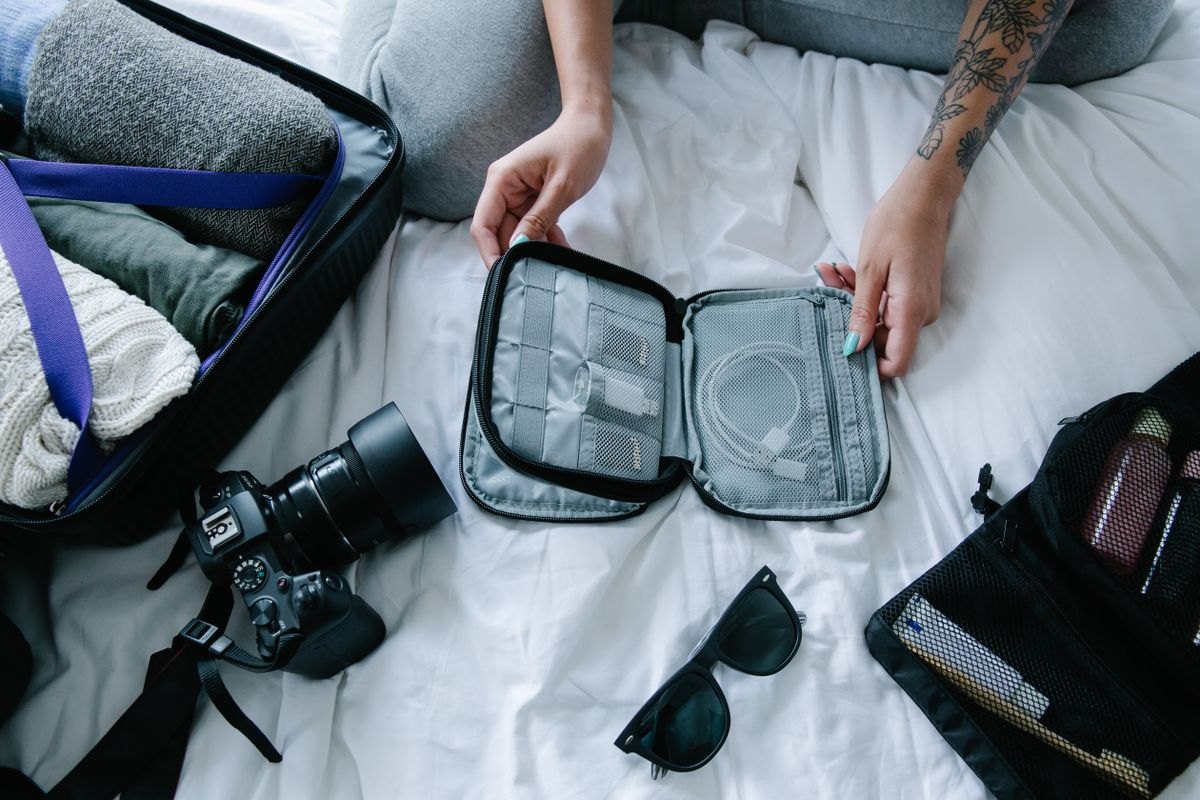
A luggage organizer should reduce searching. If every item has to come out before you can reach a charging cable, the extra pouches have made the bag less organized. Start with the things you need during the journey and the things that can wait until arrival. Those two groups often need different places.
Clothing cubes work well deeper in a suitcase because you usually open them after reaching accommodation. A small pouch for a cable, pen and earplugs belongs near the top or in a pocket you can reach while seated. Keep liquids contained and separate from papers. Leave valuables and documents in a location appropriate to keeping them under your control.
Try the shape before buying more
Measure the usable interior of the bag, including the space taken by wheels, handles and curved corners. Several rectangular cubes may fit the advertised dimensions but waste space around those obstructions. Soft pouches can be easier to arrange in a backpack, while a structured case may protect a fragile item better.
Use an existing pouch or even a temporary paper mock-up to test the size. Pack the bag as you would for a real trip, close it and retrieve the items you expect to need en route. Notice whether a zipper faces the wrong way or a handle blocks a pocket. These small access problems matter more than whether every organizer is the same color.
Choose closures you can operate comfortably. A compression zipper can make clothing compact, but it also adds another opening step and does not make the contents lighter. Avoid forcing a zipper around an overfilled cube. A bag that only closes with considerable pressure will be difficult to repack away from home.
Make contents recognizable
Different sizes, a small label or a contrasting zipper pull can help you distinguish pouches. There is no universal color code to follow. Use a system you can remember and explain to someone sharing the bag. For opaque organizers, a brief label such as “cables” is usually more useful than an elaborate numbering system.
Transparent pouches make some contents easy to see, but check material quality and cleaning instructions. Do not assume a clear pouch is waterproof or meets every transport screening requirement. Those are separate claims that need checking with the product and current travel rules.
After a trip, note which organizers stayed unopened and which became a mixed pile. Move frequently used items closer to the opening and remove pouches that no longer have a clear job. The best arrangement may be a few ordinary containers, with some belongings left loose in a suitable pocket. Organization is successful when you can find the right thing without unpacking the whole journey.