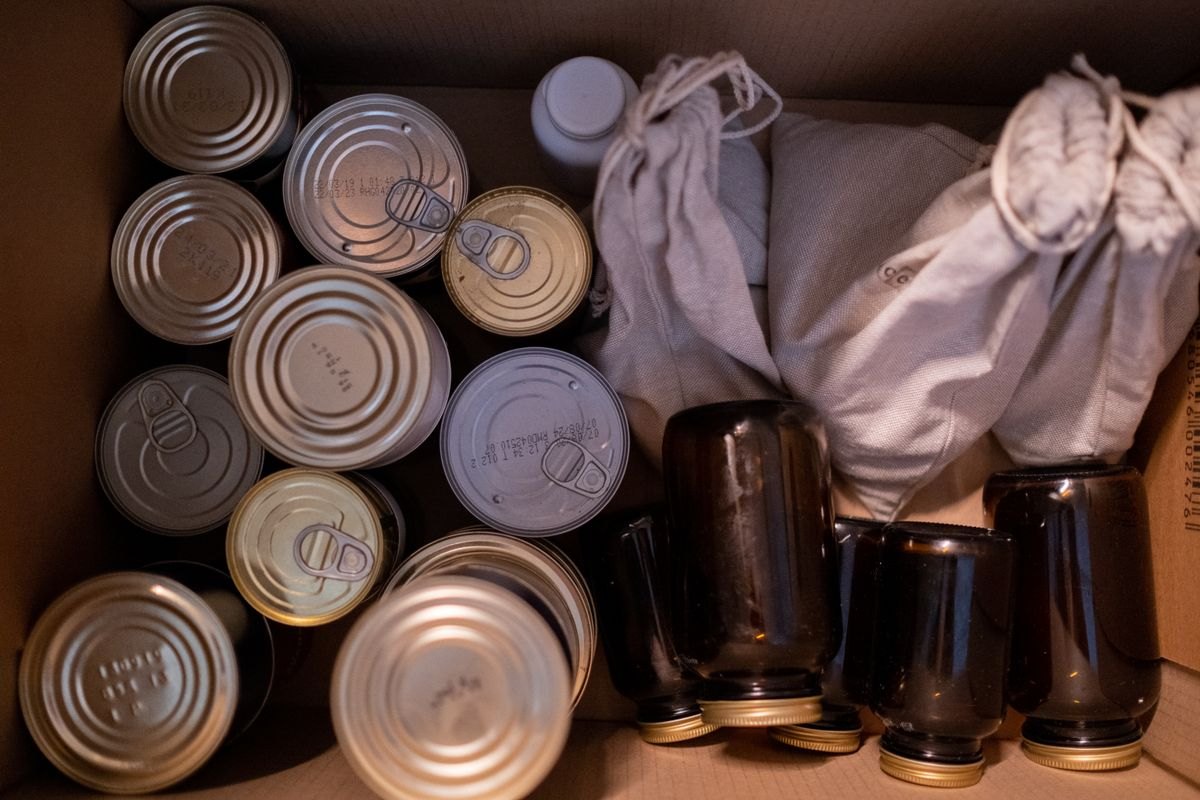
An emergency shelf can look full and still offer little to eat without a stove. Pasta, dry beans, and soup concentrate need preparation; a large jar may need refrigeration after opening. Plan several complete meals that can be assembled safely with the services you expect to have.
Choose food labeled ready to eat and shelf stable until opened. USDA's emergency guidance specifically encourages food that can be eaten cold and a manual can opener. Read each package rather than assuming everything in a can or pouch is ready for that use.
Assemble one meal on an ordinary day
Put together a combination your household would actually enjoy cold. Depending on dietary needs, that could involve ready-to-eat beans or fish, crackers or another suitable bread, and packaged fruit. These are examples, not a universal menu; choose safe foods that fit the people eating them.
Eat the proposed meal once before buying multiples. Notice the portion size, texture, saltiness, and whether everyone is willing to eat it. A product advertised as survival food still has to work for your household. This small trial can prevent a shelf full of expensive meals nobody wants.
Include the less visible items. Can the package be opened without electricity? Do you need a spoon, a bowl, or water to rinse something? Is there a place for empty packaging? If a meal needs a sauce normally kept in the refrigerator, find an appropriate shelf-stable portion or change the meal.
Plan around opened packages
Unopened shelf life does not carry over automatically after opening. Check the label's storage directions. When refrigeration is unavailable, choose package sizes the household can finish at one sitting or use a safe cold-storage arrangement. Do not leave a perishable remainder on the counter simply because its unopened package lived in the pantry.
Keep food allergies and other dietary requirements visible in the plan. Store original ingredient labels with the food, and check them again when replenishing. A different flavor or replacement brand may have different ingredients.
Add variety without adding dependence
Breakfast, lunch, and an evening meal need not use entirely different supplies, but eating the same crackers repeatedly can become unappealing. Rotate through a few familiar combinations rather than building a complicated menu. Include drinks and safe water in the calculation, especially if foods are dry or need mixing.
Use the reserve in normal meals and replace what you take. Keep the next-to-use items near the front and a short shopping note where you will see it. This makes the no-cook shelf part of the kitchen rather than a separate collection with its own forgotten dates.
A stove can remain part of a wider plan, but these meals should work without it. During an outage, having an edible meal ready lets you avoid rushing into an unfamiliar cooking setup simply because everyone is hungry.