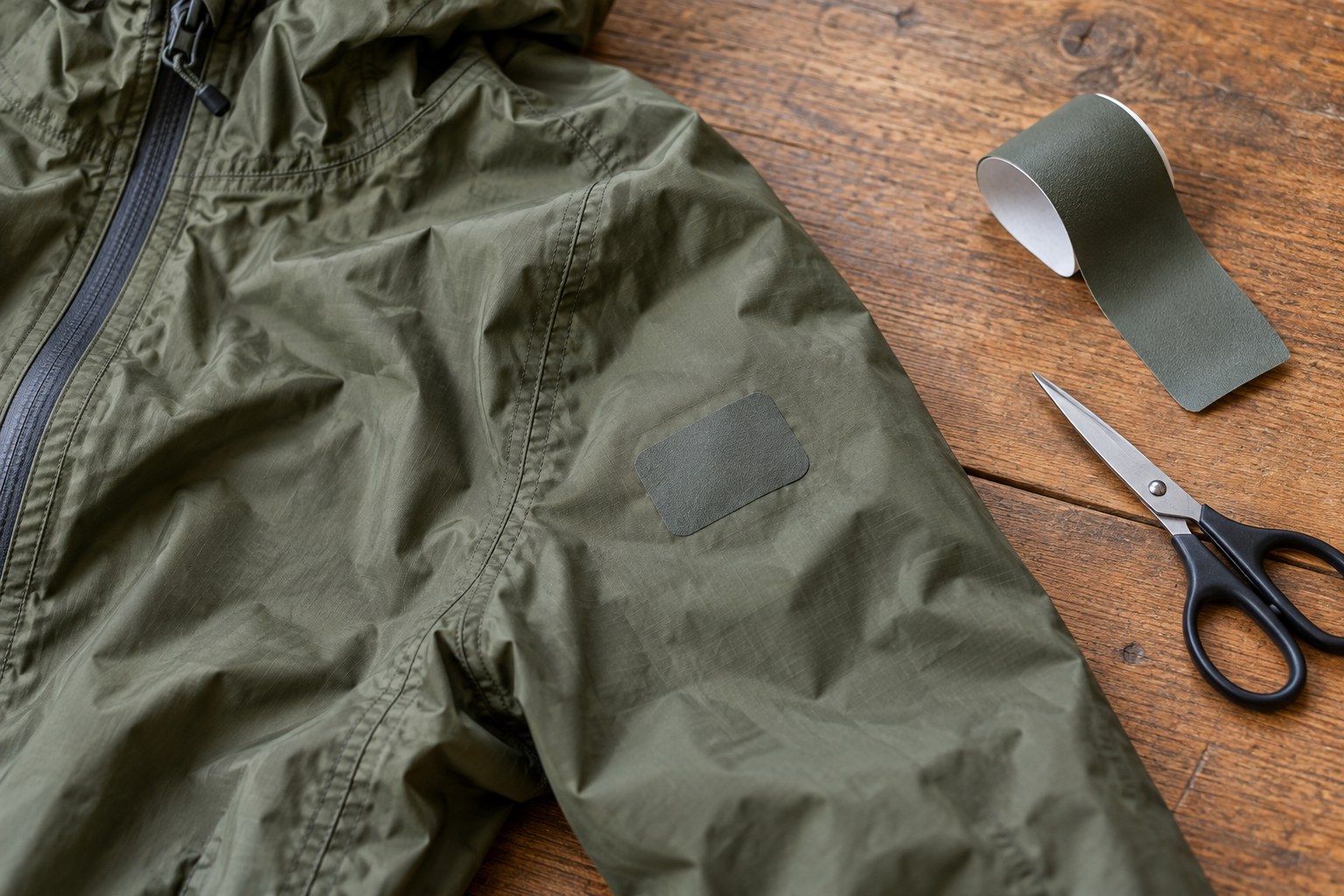
A small tear in a jacket or tent can tempt you to use whatever tape is nearest. That may hold briefly, but the adhesive can leave residue or interfere with a later repair. Before sticking anything down, identify the fabric, coating and kind of damage.
Read the item’s repair guidance and the patch manufacturer’s compatibility information. Nylon, polyester, mesh and silicone-coated fabrics may need different products. A tape sold for one material is not automatically suitable for every outdoor item.
Decide whether a patch is the right repair
A small hole in an otherwise sound panel is different from a failed seam, a broken attachment point or fabric that is deteriorating over a wide area. For load-bearing or safety-critical equipment, follow the manufacturer’s repair or retirement process. Do not use a general fabric patch to restore a harness, protective equipment or another item whose failure could injure someone.
Contact the manufacturer or a repair service before altering an expensive or warrantied item if the damage is uncertain. A photograph and the product reference may be enough to clarify the next step.
Prepare the surface as instructed
Clean and dry the area using a method compatible with the fabric and adhesive. Do not assume any solvent is safe for every coating. Lay the fabric flat without stretching the tear into a new shape. Prepare the patch size and shape according to its directions before removing the backing.
Avoid repeatedly lifting a patch unless the product explicitly permits repositioning. Some adhesives behave differently during an initial period, but that does not make every repair removable. Check required pressure, curing time and temperature before returning the item to use.
Evaluate the repair without overclaiming
Inspect the edges after the specified waiting time. Use any test recommended for the product and item, keeping it appropriate to the repair. A patch that looks neat is not proof that an entire garment or shelter has regained its original performance.
Record the product used and when the repair was made. If the item will later go to a professional, disclose the adhesive and cleaning method. Keeping those details can prevent a temporary repair from making the final repair harder than it needs to be.