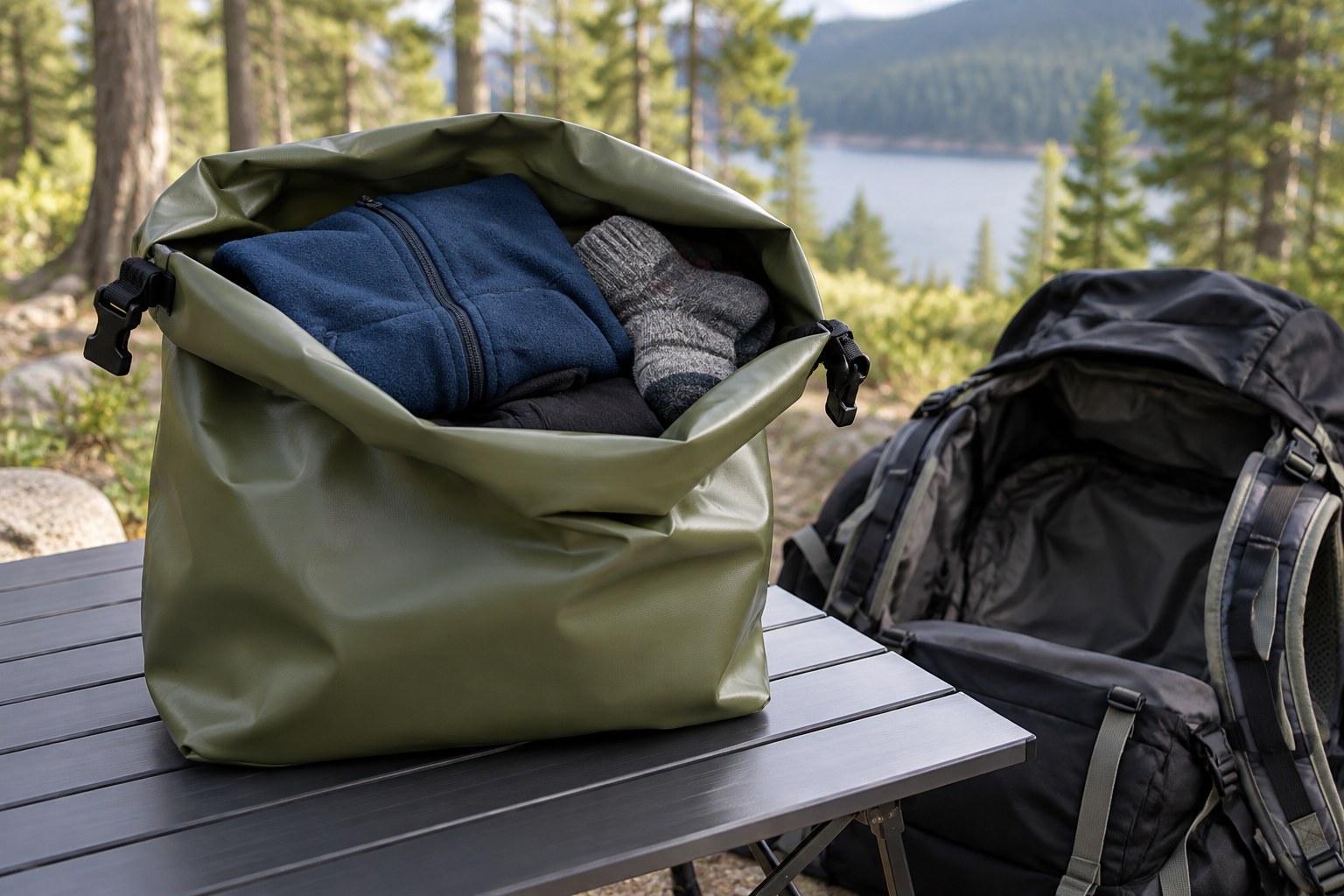
The extra layer in your backpack is useful only if it is still usable when you need it. Rain can enter through openings, a bottle can leak and a wet jacket can spread moisture through the rest of the load. Keeping spare clothes dry is a packing task as much as a fabric choice.
Choose which items need the most protection first. A spare insulating layer and sleeping clothing may matter more than an outer pocket holding a damp map case. Separating them makes it possible to retrieve everyday items without repeatedly opening the compartment that protects the dry reserve.
Understand the bag's closure
A liner or dry bag needs enough room to close as designed. Overfilling a roll-top bag leaves too little material for the required folds. Follow its instructions rather than judging the seal by whether the buckle clicks. Some products resist splashes but are not intended for immersion, and the word dry in a product name does not establish every limit.
Inspect the material for holes, worn corners and damaged seams. Keep sharp equipment away from the liner. A cheap, replaceable liner can be useful for ordinary rain protection, but it should not be treated as a tested container for a river crossing or another immersion risk.
Pack clothes loosely enough that you can identify them without emptying everything onto wet ground. One larger protected compartment may be simpler than several small bags. If you use separate bags, distinguish them by color or label instead of relying on identical shapes.
Give wet things another place
When you take off a wet shell, keep it outside the dry clothing compartment. An outer pocket or separate bag may help, provided it does not create an unstable load or trap moisture against other sensitive equipment. At a stop, think about where the open backpack is resting as well as what is falling from above.
A pack cover is useful for some conditions, but it does not seal the area around your back or every strap opening. It works best as one part of the arrangement, not as a reason to omit protection for important contents.
When you get home, open every compartment. Dry the liner, pockets and clothing before storage, even if the outside of the pack feels dry. Leave a note about a leaking bottle or a closure that was difficult to use. Fixing that specific problem will protect the next trip more effectively than adding another anonymous pouch.