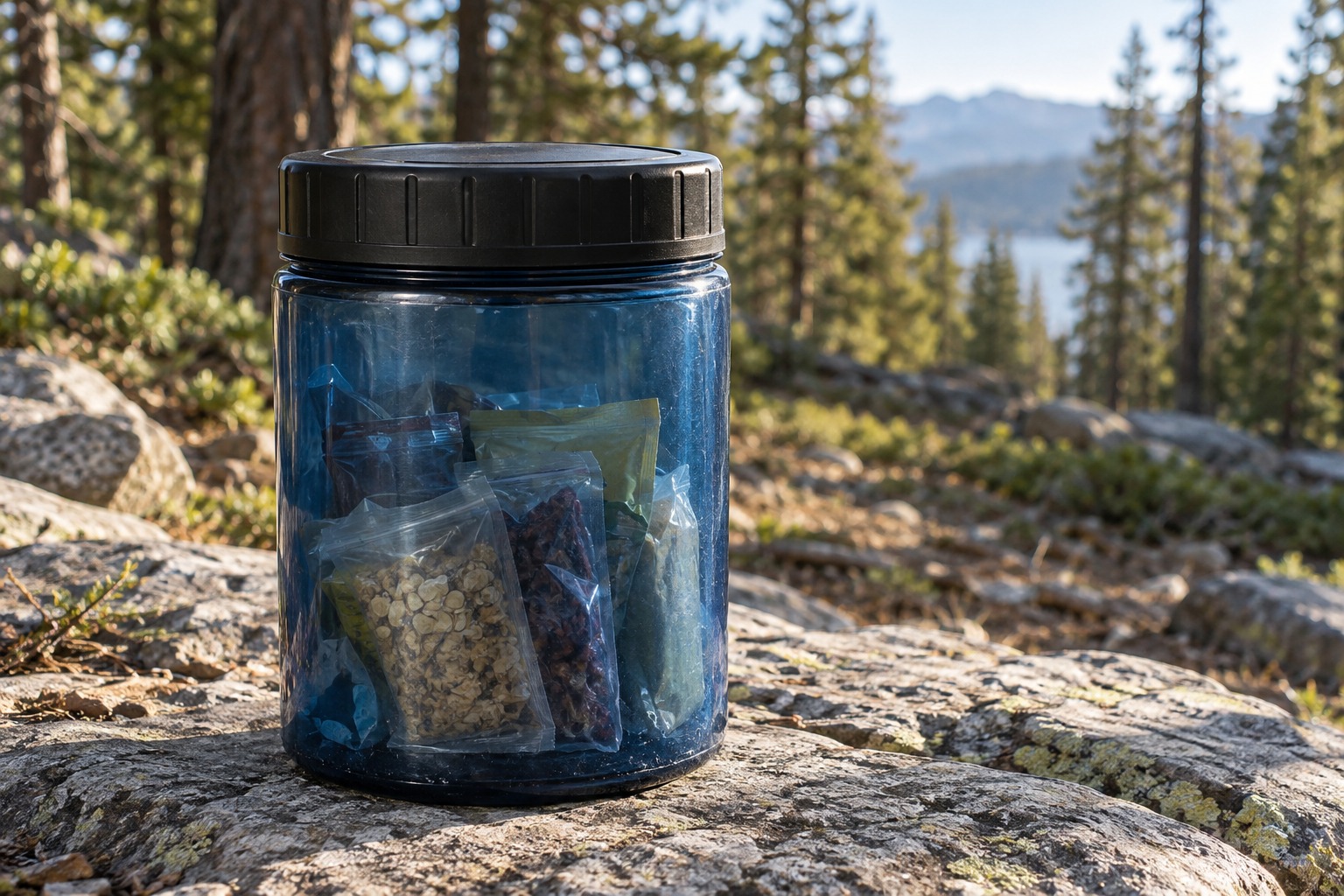
Food storage starts when you arrive at camp, not after the last meal. A snack left in a backpack or a cooler beside a picnic table can attract animals while you are busy putting up the tent. Decide where food and other attractants belong before unloading everything.
Check the rules for the exact campground or backcountry area. Approved containers and storage arrangements differ by location. A method allowed in one park may not satisfy another park's requirements, and a product advertised as resistant to animals may not be approved for the place you are visiting.
Include more than meals
Trash, wrappers and scented toiletries may need the same treatment as food. Follow the land manager's list of attractants rather than using smell as your own test. Keep the entire collection together enough that putting it away does not require searching through every pocket at bedtime.
Do not store food in the sleeping area. Arrange cooking, eating and storage according to local guidance, including any required separation. Where lockers are provided, check how they close and make sure the latch is fully engaged. A door that is merely resting shut has not completed the job.
If you need a portable container, try packing the full supply at home. Include the meals for the last day, snacks, waste and other required items, not just the first night's dinner. Being able to close an empty container says nothing about whether the trip's supplies fit.
Keep the routine going during the day
Put food away whenever it is unattended. Avoid leaving a bag on the ground while taking a photograph or walking to the restroom. Give one person a clear role during meal cleanup, while still making sure everyone knows the storage location and closure procedure.
Collect scraps and packaging rather than leaving small pieces around the table or tent. Store waste as instructed and use designated disposal facilities when available. A tidy-looking campsite can still have food in clothing pockets or an open bottle near a sleeping bag.
If an animal enters the area, follow the park's species-specific guidance and keep your distance. Do not approach it to protect groceries or attempt to feed it away from camp. Report damaged storage equipment to the host or managing agency. Effective food storage protects wildlife as well as campers, and it depends on a consistent routine rather than on a container alone.