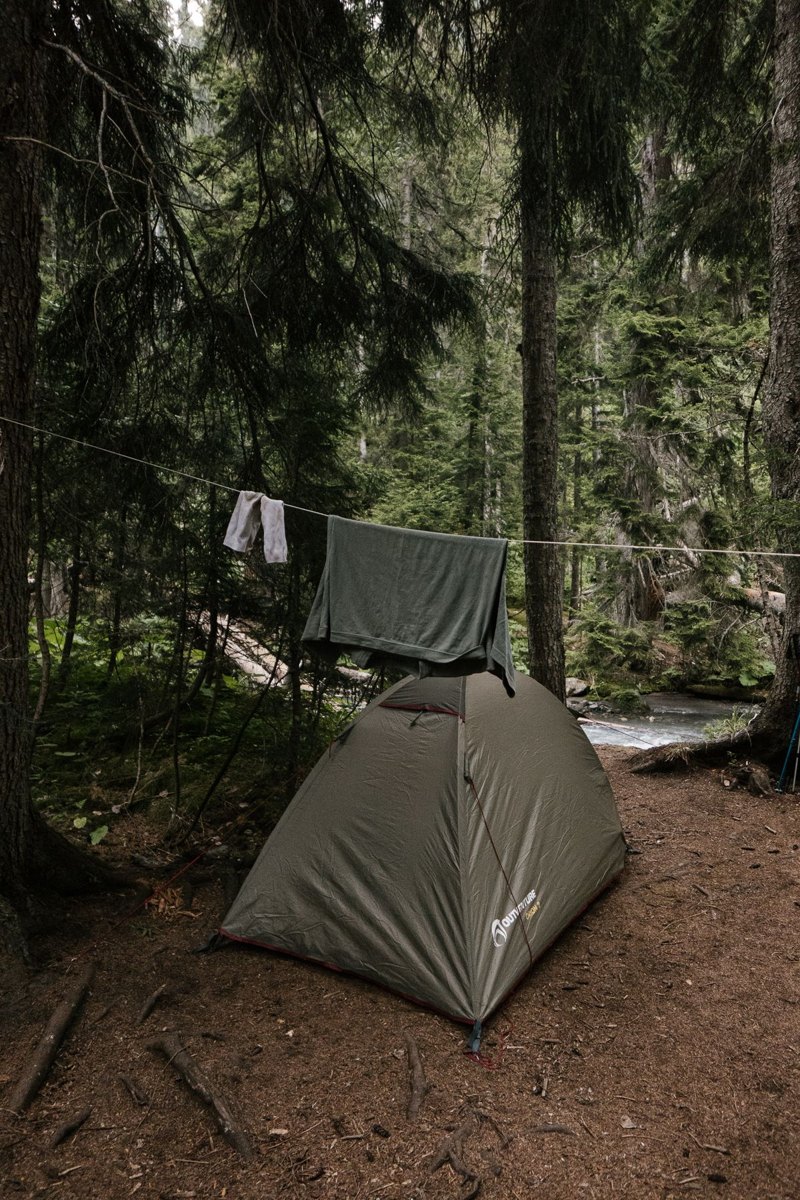
Coming home tired makes it easy to leave a packed tent by the door until the weekend. Moisture inside the bundle does not take the same break. Even equipment that avoided rain may have collected condensation, damp soil or perspiration during the trip.
Open the pack as soon as you reasonably can. Separate dry items from those needing attention, and give the tent, groundsheet and other large pieces room to air. Choose a clean, suitable space rather than draping coated fabric over a heater or leaving it in harsh heat.
Check more than the outer surface
A tent fly can feel dry while folded hems, attachment points and the underside still hold moisture. Open the fabric enough for air to reach those places. If the manufacturer recommends pitching or hanging it for drying, follow that method. Turn or reposition items when needed instead of assuming one exposed side tells you about the entire piece.
Empty pockets and remove debris gently. Dirt caught around a zipper should be dealt with according to the care instructions before repeated use works it farther into the mechanism. Avoid strong cleaners or a washing-machine cycle unless the manufacturer specifically allows them.
Sleeping bags, pads and clothing may need different care from the tent. Read their individual labels rather than applying one cleaning routine to everything. Allow equipment to dry fully before deciding whether it needs a repair; a small problem is easier to examine when the surface is clean and dry.
Store for the interval between trips
Use the storage arrangement the product maker recommends. A tightly packed travel sack is not automatically the right place for long-term storage. Keep equipment in a dry location away from damaging heat, pests and chemicals, and avoid piling sharp tools against fabric.
Put missing stakes, damaged straps or worn patches on a short repair list while you still remember what happened. Keep the list with the equipment so a problem does not reappear as a surprise at the next campsite.
A final check can be simple: open the storage area a few days later and confirm that no item has been forgotten in a damp bag. Preparing for the next trip begins with finishing the last one, including the unglamorous work of getting everything dry.