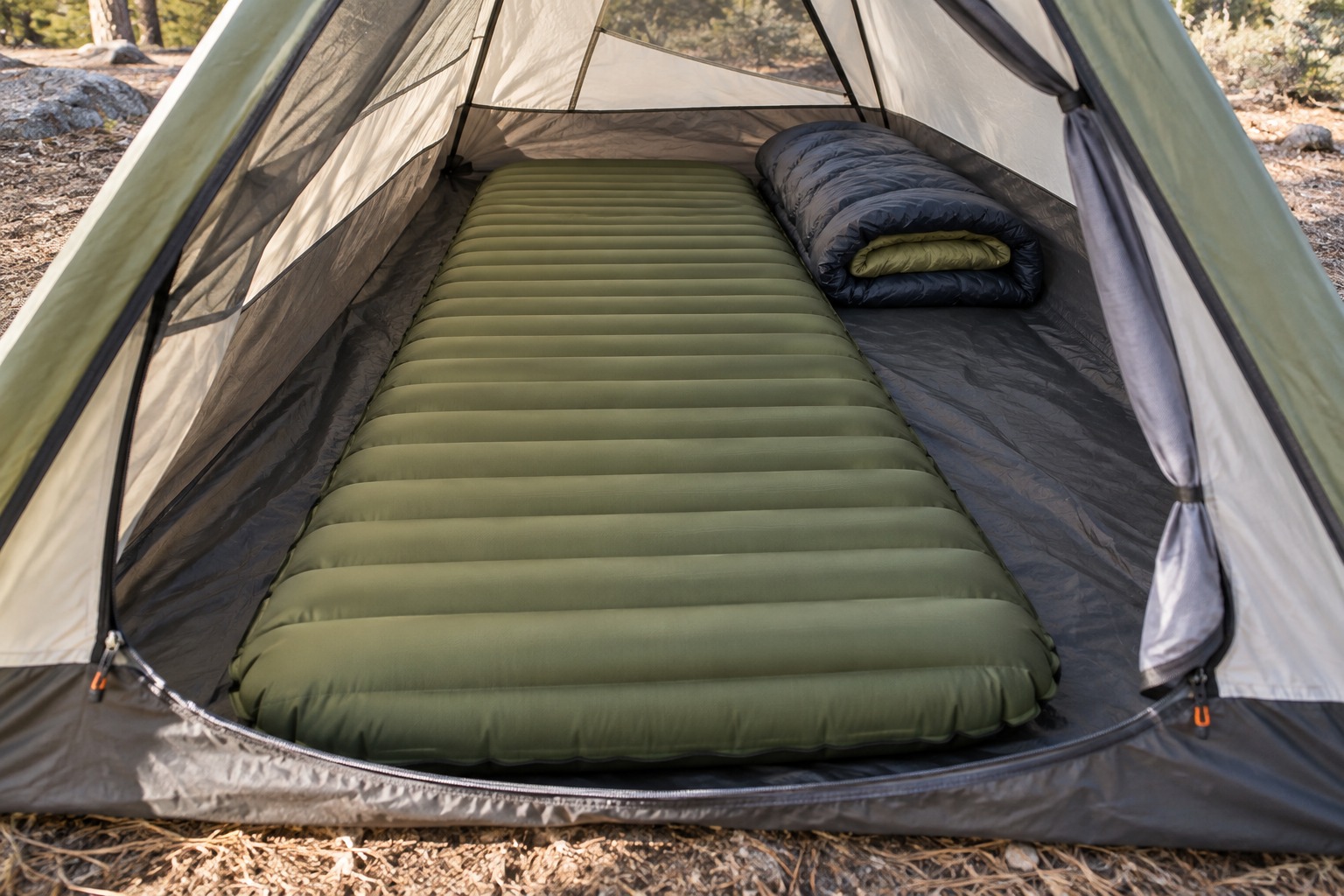
A thick sleeping pad can feel comfortable and still be a poor choice for cold ground. Its thickness describes its shape, while insulation describes resistance to heat loss. Looking at those properties separately makes a comparison more useful than choosing the tallest-looking pad in a photograph.
Start with the expected conditions and the complete sleep setup. A sleeping bag cannot compensate reliably for every weakness underneath it. The ground, shelter, clothing, moisture and your own experience of sleeping outdoors all affect how the night feels.
Read the insulation information
For pads tested to the same relevant standard, a higher R-value indicates greater thermal resistance. It is not a direct promise of comfort at one particular air temperature. Manufacturer guidance can help put the number in context, but avoid treating an online conversion chart as a guarantee for your body and campsite.
Check whether the product actually reports a tested R-value. A general description such as three-season may mean different things between brands. Compare like with like and ask the manufacturer when a specification is unclear. If the planned conditions are close to the limits of your experience, choose a more conservative trip as well as appropriate equipment.
Lie on the size you will carry
Test the pad in your usual sleeping position. Shoulders, hips and feet need adequate space, and a narrow tapered shape may save packed volume while feeling restrictive. Put the pad inside the shelter if possible, especially when several people will share a small floor area.
With an inflatable pad, learn how to adjust firmness and close the valve. A pad that is comfortable when sitting on it can feel different after lying down. Follow the maker's inflation guidance and keep it away from sharp objects and inappropriate heat sources.
Closed-cell foam and inflatable designs have different tradeoffs. Foam is bulky but does not depend on maintaining air pressure. Inflatable pads can pack small, but a puncture or valve problem can change the night's plan. This is a reason to understand repair options and trip consequences, not to declare one construction universally best.
Think about the morning after
Try packing the pad with the rest of your equipment. A bulky item strapped outside can snag or shift, while a tightly packed inflatable may need more drying and care before storage. Check the actual packed shape instead of relying only on a product's stated dimensions.
Keep the compatible repair supplies if the pad requires them and learn the manufacturer's method before the trip. After use, inspect and dry the pad as directed. Record how the sleep system worked in known conditions. Those observations, combined with specifications, are more useful for your next choice than assuming a number on the label predicts every night outdoors.