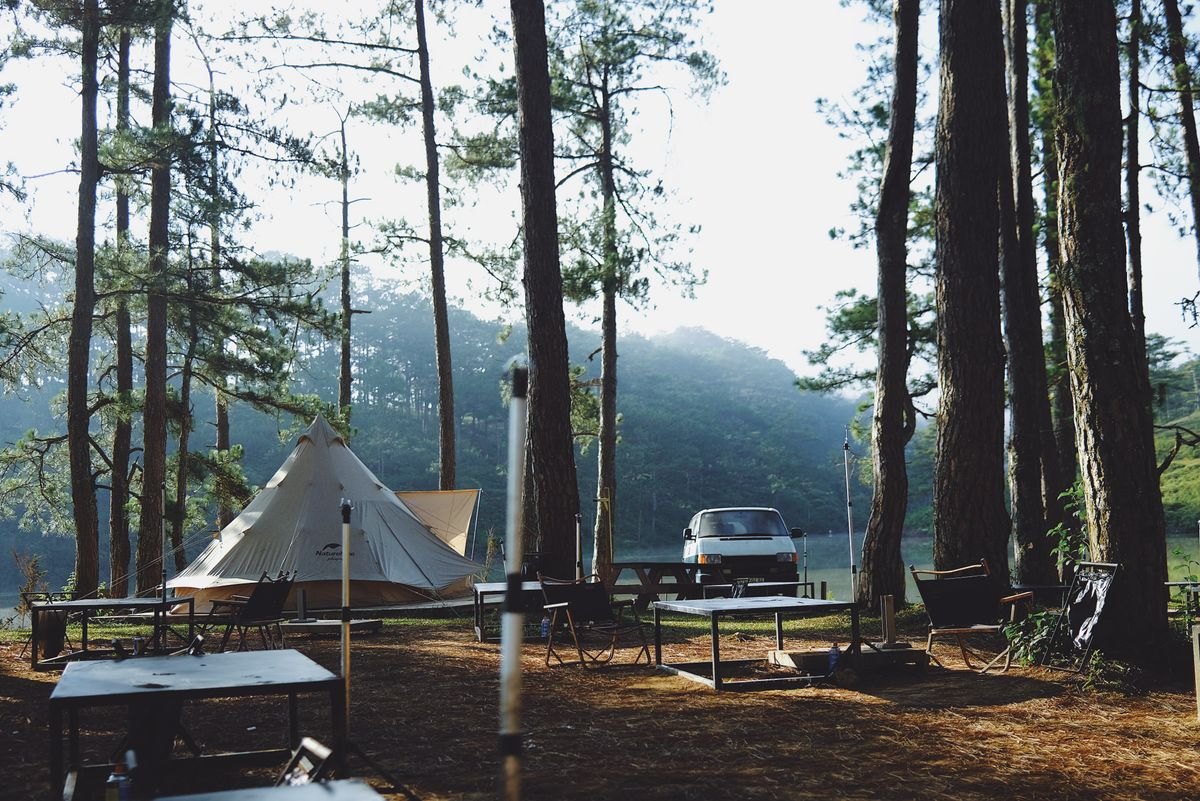
An overnight trip introduces several routines at once: setting up shelter, cooking, organizing food storage and sleeping somewhere unfamiliar. Choosing a nearby established campground can leave more attention for those tasks than a long approach to a remote site.
An easy exit does not mean arriving without a plan. Check reservations, opening times, water availability, restroom arrangements and current alerts. Confirm the route to the campground and how late arrival works. A closed gate is an avoidable complication when you are already learning the rest of the setup.
Keep the first schedule open
Arrive with daylight available and avoid adding a demanding hike before making camp. Walk around the assigned site, identify the tent area and required food storage, then set up the shelter. A simple meal leaves time to learn where things belong without juggling several cooking steps.
Use equipment you have tried at home. A first outing is a chance to see how the familiar setup works in a new place, not an ideal time to open every package for the first time. Keep instructions accessible and bring the small components that are easy to leave beside the practice area.
Share the plan with someone who is not going. Give them the campground details and a check-in arrangement that accounts for possible lack of phone service. If the group includes children, explain the site boundaries, restroom route and who to ask before leaving the immediate area.
Decide what would make you leave
Look at the forecast for the campground and know where suitable shelter is available. A tent does not protect you from lightning, and moving to a vehicle or building may be necessary. Equipment problems, illness or conditions beyond the group's experience are also valid reasons to end the outing.
Avoid treating departure as a failed test. The benefit of a forgiving first location is that you can change the plan before a small difficulty becomes a much larger one. Keep the vehicle or exit arrangement usable rather than blocking it with scattered supplies.
In the morning, allow time to dry and pack equipment properly. Make a short note of what was hard to find, uncomfortable or unnecessary. Use those observations to adjust the next trip's length and location. You do not need to turn one successful night into an immediate leap to remote camping; repeating a manageable outing with a better setup is progress too.